From Vonn to Pellegrino: Durability Lessons from the Winter Olympics 2026
Three stories from Milano‑Cortina 2026 that show how Olympians decide when to go, adjust, or stop.

Is pain a mandatory part of sport—or just a message we’ve been trained to ignore until it’s too loud to handle?
At the Milano‑Cortina 2026 Winter Olympics, pain was everywhere, but the way athletes responded to it couldn’t have been more different. That contrast is the perfect lens for what we’ve been talking about all February: red flags, pain as information, and the hard decisions that actually protect your relationship with sport.
Three Olympic stories, three different decisions
We love to talk about “grit” as if it’s one thing: you either push through or you don’t. But if you look closely at how top athletes handled pain and illness these last weeks, you see something much more interesting—and much more useful for the rest of us.
Let’s sit with three stories: Lindsey Vonn racing on a torn ACL, Jessie Diggins skiing with bruised ribs, and Federico Pellegrino choosing not to start his home‑Olympic 50 km.
Each one shows a different answer to the same question: “Given my body, my context, and my goals…what’s the smartest move today?”
Lindsey Vonn: informed risk, not reckless bravery
Lindsey Vonn came into Milano‑Cortina with a fully torn ACL in her left knee, meniscus damage, and bone bruising. She knew it. Her medical team knew it. The world knew it. She wore a brace, adapted training, and still chose to race the Olympic downhill. This wasn’t a hidden injury or a surprise diagnosis—it was a deliberate, eyes‑wide‑open call at the end of a long career.
We all know the story: she crashed early in her run. The crash itself was caused by a line error over terrain, not a knee giving out. The consequences, though, were brutal: a complex tibia fracture and ankle fracture, compartment syndrome, multiple surgeries, and the very real possibility of amputation. She later talked through the details without self‑pity or blame. It was a risk she took, a price she ended up paying.
You can disagree with the choice and still respect what it was: not a movie version of bravery, but a calculated decision by an Olympian near the end of her career, with full information and world‑class support.
Most of us are not Lindsey Vonn.
We don’t have a whole medical team on call, or a finite Olympic window, or a downhill that will define the final chapter of our career. We have kids to carry, jobs to show up for, age‑group seasons we’d like to finish, and a body we hope will still work in twenty years. Using her story well means not copying her decision, but asking: “In my context, with my support and my goals, what level of risk makes sense?”
Jessie Diggins: working with pain, not pretending it’s not there
In cross‑country skiing, Jessie Diggins is almost synonymous with the “pain cave.” We’ve already talked about her in that context: the athlete who can go there on purpose and stay there longer than almost anyone else. But Milano‑Cortina gave us a slightly different angle on her toughness.

Early in the skiathlon, Diggins went down hard in heavy, wet snow and bruised her ribs. From that point on, every double‑pole, every deep breath, hurt. She talked about it openly: racing became “an exercise in pain tolerance,” not a question of whether she felt normal again. And yet she finished 8th in the skiathlon, lined up again for the classic sprint, and made clear that she and her team were constantly weighing “how bad does this feel, what’s at stake today, and what’s the risk of making it worse?”
That’s a different flavor of hard than “ignore it and hope.” She wasn’t pretending her ribs were fine; she was adjusting expectations, accepting sub‑optimal performance, and staying in close communication with her body and her staff. The decision wasn’t “no pain” vs “pain”; it was “this level and type of pain is tolerable and manageable for these specific races, with these guardrails.”
For you and me, the lesson isn’t “always race with bruised ribs.” It’s that pain can be part of the plan when:
You know what it is.
You understand the likely consequences of loading it.
You have a way to monitor and stop if it crosses a line.
You’re honest about the trade‑off.
If you’re doing your local 10K with a niggle that your physio has assessed, that’s one thing. If you’re doing repetitive high‑impact efforts on a pain you’ve never checked out “because I already signed up,” that’s something else entirely.
Federico Pellegrino: the heartbreak of not starting
Then there’s the decision that almost never makes the highlight reels: choosing not to race at all.
Federico Pellegrino entered these Games with wrist tendinopathy that he and his team had been managing. The 50 km classic was supposed to be his last big race—a home‑Olympic farewell over a brutal course. Instead, a few days before the start, he went down with flu‑like symptoms and spent most of the time in bed. On the eve of the 50 km, he wrote an open letter announcing that he would not start. He called the choice “strappacuore,” heart‑rending.
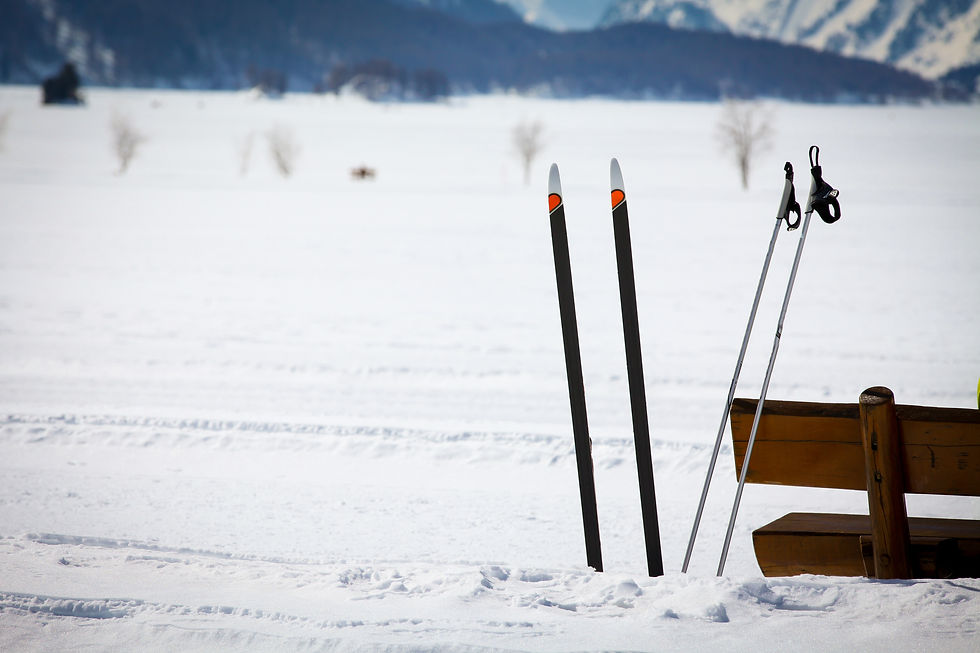
From the outside, we see a DNS on the results sheet. From the inside, it’s a masterclass in long‑term thinking.
Pellegrino had every emotional reason to force it: home crowd, last race, the pressure to “at least try.” But he also knew what a 50 km Olympic classic does to a sick, already‑tweaked body. It’s not just hours of suffering; it’s the risk of turning a manageable situation into a months‑long problem. He chose the option that protected his health and his life beyond that one Sunday, and he did it publicly, owning how much it hurt.
It’s easy to admire Vonn and Diggins for what they did. It’s harder, but just as important, to admire Pellegrino for what he didn’t do.
It wasn’t just them
If you zoomed out from these three names, Milano‑Cortina was full of similar crossroads. Federica Brignone talked about racing on an injury that “would normally need more than two years” to heal, saying she hasn’t had a single pain‑free day since and that the everyday walking and stairs are sometimes harder than the runs themselves. Australian freestyle and snowboard athletes saw their Games end with neck fractures and concussions that triggered strict protocols—no “pushing through” when the line had clearly been crossed. German biathletes scratched races with acute stomach illness rather than pretending they could just “tough out” a 15 km effort on an empty tank.
Different sports, different bodies, same underlying question: “What do I do with the signals my body is sending right now?”
You’re not an Olympian. Your decisions matter just as much.
You’re probably not chasing downhill medals, Olympic starts, or final‑career races with an entire support staff behind you. You’re more likely to be juggling training between shifts, kids’ bedtimes, and winter viruses. But every week, you face smaller versions of the same questions these athletes dealt with in front of the world:
This hurts. Do I go, adjust, or stop?
I’m getting sick. Do I race, shuffle, or scratch?
This block matters to me. What risks am I willing to accept, and which ones are a hard no?
So what can you take from their stories and apply to your own training life?
A few starting points:
Know your context. Vonn’s near-end-of-career calculus is not the same as your mid‑thirties half‑marathon. Pellegrino’s “last home 50 km” is not your local granfondo. Your age, injury history, support, and life responsibilities change the equation.
Get curious about your pain, not heroic about it. Diggins didn’t act as if her ribs were fine; she adjusted her racing and set clear boundaries. In everyday training, that might look like shortening a session, swapping impact for low‑impact, or asking for an assessment instead of doing another week of “wait and see.”
Remember that “not starting” is also a decision. We glorify the start line and the finish, but scratching a race, walking off a pitch, or turning an interval day into easy movement can be the most durable choice you make all year.
Where we go from here
All month, we’ve been talking about red flags, pain vs injury, and the difference between healthy suffering and the kind that slowly takes the sport you love away from you. These Olympic stories put real faces and names on that conversation—but they’re still just the reflection.
In the next piece, I'm going to turn this into something you can actually use on any random training session: a simple, practical playbook for what to do when pain, fatigue, or illness show up in your training. Not at the Olympics—on your usual loop, in your living room gym, on your favorite trail.
Because loving your sport isn’t about proving how much you can suffer. It’s about making decisions—big and small—that let you keep showing up, year after year.


Comments